
quality(75))
What is a smart home?
A smart home is made up of smart devices that make everyday life easier. Want to wake up with the sun? Use a smart device to open your bedroom blinds at a certain time. Or come home to a warm house by controlling your thermostat from a mobile app.
With a few well-chosen devices you can make your home run smoothly, manage energy usage more efficiently and add a little extra convenience – without committing to a full smart home installation or premium price tags.
Start small and build from there
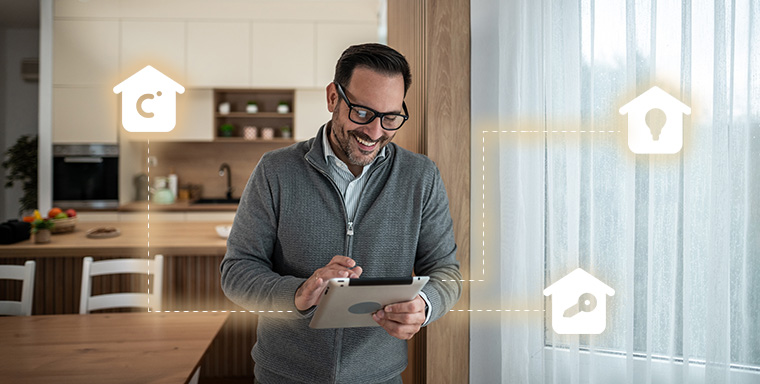
Building your smart collection slowly is a good way to stay within budget. Choose one or two smart home devices that offer clear value straight away, then expand gradually. This helps you to understand which devices you use, so you can build a personalised smart home setup that genuinely improves how you experience your home.
Smart speakers and home assistants are a great place to start. They’re among the most popular smart home devices, thanks to their affordable price points. Devices that work with Google Home, Amazon Alexa or Apple HomeKit can serve as a central smart hub. Make it easy to connect multiple devices and manage compatible lights, plugs and more from one place – either by using an app, smart watch or basic voice commands like “Alexa, turn on the heating.”
Once you have a central hub in place, adding new devices like Apple HomePod 2nd Generation or Apple HomePod mini can be much simpler and easier to manage.
Smart lighting that helps reduce energy use
Smart lighting is one of the most cost-effective upgrades you can make. Smart bulbs allow you to schedule lights, adjust brightness and control them remotely, helping to avoid wasted electricity.
Set your lights to turn off when you leave the house or dim them in the evenings to reduce energy use. It’s a small difference, but one that can quietly save you money over time.
Smart plugs are another easily installed device that won’t break the bank. They turn everyday appliances into smart home devices, giving you control over lamps, heaters or entertainment systems from your phone. Some also offer energy monitoring, helping you understand which devices are using the most power.

Smart heating
Heating plays a big role in our household bills, which makes it a key target for a smart device upgrade.
Installing a smart thermostat means you can control your heating from your smartphone. You can get more control over when the heating comes on, manage schedules and adjust the temperatures. Devices like Nest Thermostat or Hive can help you boost your energy efficiency and save you money in the long run.
You don’t need to upgrade everything at once. Adding smart radiator valves or temperature sensors in key areas can help you focus heat where it’s actually needed, improving comfort while keeping costs in check.
Top tip: A reliable broadband connection helps keep everything running smoothly, especially if you’re managing heating and settings while away from home.
Affordable smart home security
Home security systems can be expensive. Thankfully, smart home technology can keep you safe and give you peace of mind.
Video doorbells like Ring let you know when someone’s at the door and records video footage of any movements outside your home. These recordings are stored in the mobile app and you can view them at any time. They can also be downloaded and shared with emergency services like the police in case of an incident.
You can turn on mobile alerts for when someone is detected, so you can check in on your home wherever you are.

Choosing a smart home ecosystem
When building a smart home on a budget, compatibility matters. Choosing one main ecosystem – such as Google Home, Amazon Alexa or Apple HomeKit – can help avoid unnecessary spending later on.
Sticking to one platform makes it easier to ensure devices work well together and reduces the need for extra smart hubs or replacements. Before buying, it’s worth checking which ecosystem a device supports, especially as your setup grows.
Building a smart home that works for you
The best smart homes are the ones that deliver value to the people who live there. By understanding which devices you’ll use and integrating these into your daily routine, you’ll end up with all the benefits of a fully functional smart home that works for you.
By starting small, choosing compatible devices and adding features gradually, you can build a smart home that fits your lifestyle and your budget.
Smart home technology doesn’t need to be complicated or expensive. With a bit of planning and research, even a few essential devices can make a real difference to how your home runs day to day.
Related articles
quality(75))
quality(75))
quality(75))
AI phones: How your phone can help you
Explore how AI tools can elevate everyday life